About our Medicine Course
This course introduces students to the world of medicine through clinical scenarios, practical activities, ethical debate and healthcare innovation.
Students explore key areas of medicine including the cardio-pulmonary system, brain and behaviour, infection, outbreak investigation, public health, emergency medicine, global health systems and the future of medical technology.
The programme is designed to help students understand what medicine involves beyond the classroom. They will practise communication, build diagnostic reasoning, reflect on patient care and explore the responsibilities that come with working in healthcare.
By the end of the programme, students will have developed a stronger understanding of medicine as both a science and a vocation, while building experiences they can reflect on in future university applications and interviews.
At a Glance
Ages 14 to 18
Ambitious students preparing for university study
University of Bath
A prestigious, safe and inspiring academic location
Residential
Full boarding in secure university accommodation
Summer 2027
4th – 17th July or 18th – 31st July
Inspiring tutors
Work with engaging, experienced tutors
£4,500
Course fee, with tuition, accommodation and activities included

What You'll Study: Course Curriculum
Clinical Foundations
Introduction to Medicine
Students explore the breadth of medical careers, the role of the multi-disciplinary team and what it means to study medicine. They begin building a reflective portfolio, starting with their own “Why Medicine?” reflection.
The Cardio-Pulmonary System
Students learn basic heart and lung anatomy and physiology before applying this knowledge to a case study involving chest pain and shortness of breath. They explore differential diagnoses, basic ECG and chest X-ray interpretation, vital signs and anaphylaxis response.
Medical Communication & History Taking
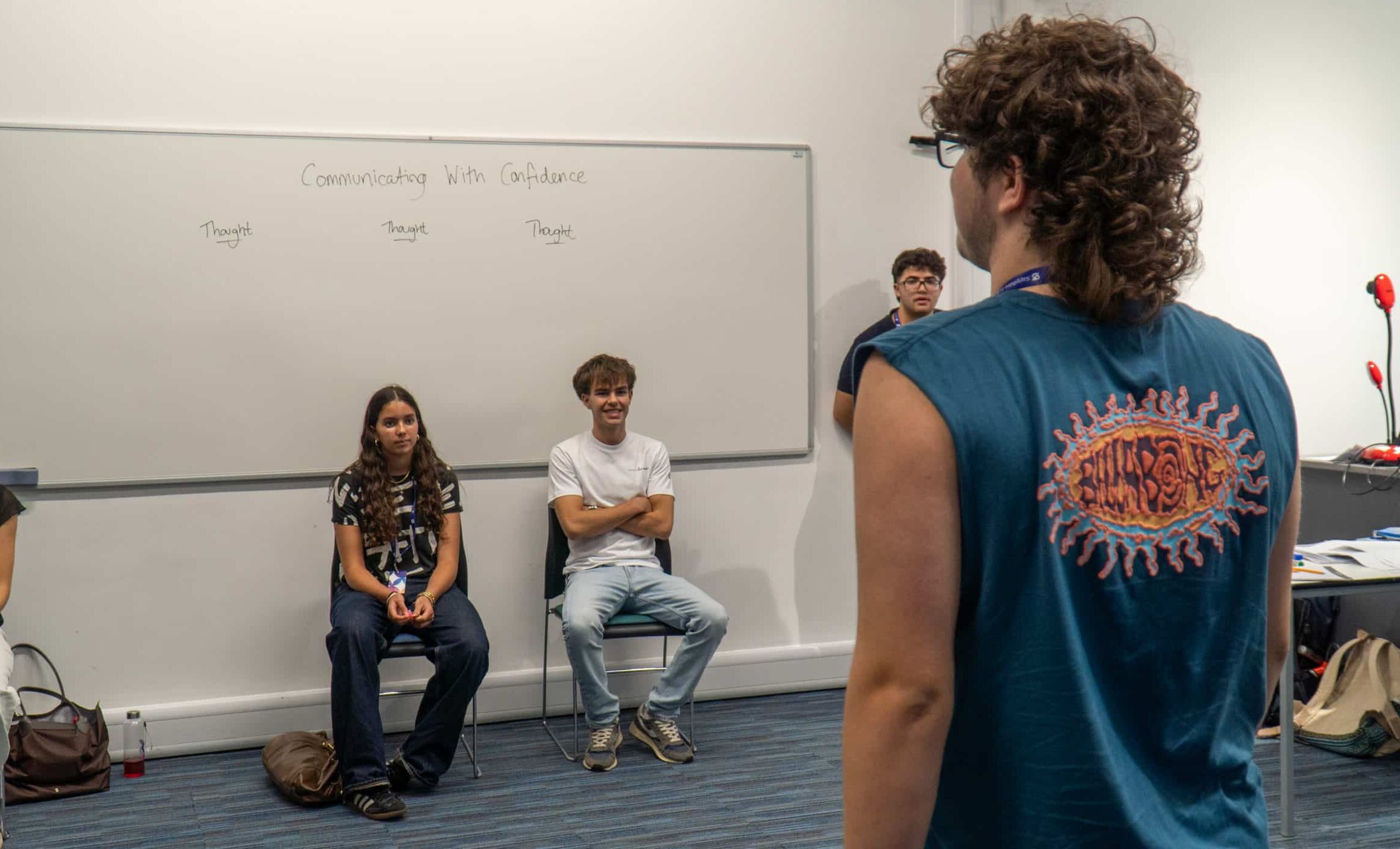
Students practise taking patient histories through role play and structured scenarios. They consider empathy, professionalism, trust, breaking bad news and the importance of clear communication in clinical settings.
Brain & Behaviour
Students explore the nervous system, brain function, neurological conditions and mental health. They consider stigma and barriers to support before creating a mental health awareness campaign for young people.
Outbreak Investigation: Salmonella
Students investigate the gastrointestinal system, infection and immunity through a simulated foodborne outbreak. Working in teams, they analyse data, trace a likely source and produce an outbreak timeline and team report.
Clinical Reasoning, Ethics & Public Health
Clinical Reasoning: Mystery Diagnosis
Students manage an evolving clinical case, refining their thinking as new symptoms and evidence emerge. They research differential diagnoses and prepare a simulated clinical handover.
Project Part 1: Clinical Case Presentation
Students present a clinical case in a simulated ward round, explaining the presenting complaint, differential diagnoses, investigations and management plan. They also give and receive structured peer feedback.
Medical Ethics
Students explore the four pillars of medical ethics and apply them to clinical scenarios involving consent, resource allocation and professional judgement. They practise structured reasoning and situational judgement thinking.
Public Health & Inequalities
Students examine major public health challenges, including obesity, vaccine hesitancy, vaping and health inequalities. They design public health messages and consider how healthcare access differs across communities.
Emergency & Forensic Medicine
Students respond to a simulated road traffic collision, thinking through triage, trauma care, blood groups, forensic evidence and emergency decision-making. They also practise CPR and consider the role of emergency medicine in society.
Future Medicine, Global Health & Final Projects
History of Medicine
Students explore how medical knowledge has developed over time, from early theories of disease to major scientific breakthroughs. They research a medical milestone and reflect on how history shapes modern medicine.
Future of Medicine
Students investigate how AI, robotics and emerging technology are already changing healthcare. They consider the benefits, risks and ethical questions surrounding innovation in medicine.
Global Health Systems
Students compare the NHS with other healthcare systems, looking at cost, access, quality and equity. They research a specific area of care and propose an improvement to a healthcare system.
Final Project Development
Students bring together their learning from across the course to develop their final healthcare innovation pitch. They refine their idea, prepare evidence and practise communicating their proposal clearly.
Project Part 2: Healthcare Campaigns
Students pitch a campaign, service or healthcare improvement idea designed to address a real-world issue. They explain the problem, target audience, proposed solution, feasibility and potential impact.
Innovation Showcase: Healthcare Solutions Challenge
The Healthcare Solutions Challenge is the final showcase of the Medicine, Health & Innovation course.
Students draw on clinical reasoning, public health, ethics, global health and innovation to design a healthcare campaign or service that responds to a real-world problem.
Their final pitch may address areas such as:
- Public health and prevention
- Healthcare access and inequality
- Mental health support
- Medical technology and AI
- Emergency care
- Patient education
- Global health challenges
Students present their idea clearly, explain why it matters and respond to questions from their peers and tutor. Alongside this, students also complete a clinical case presentation earlier in the programme, helping them practise medical reasoning, handover structure and professional communication.
The Future: University and Careers
The programme is designed to give students a broad set of experiences that help them understand future university and career options in medicine, healthcare and health innovation.
Students explore the realities of studying medicine, different medical pathways and the skills needed for future applications and interviews.
Careers linked to this course include:
Medicine
Surgery
Emergency Medicine
Public Health
Global Health
Medical Research
Healthcare Innovation
Medical Ethics & Policy
Reference Letter and Certificate
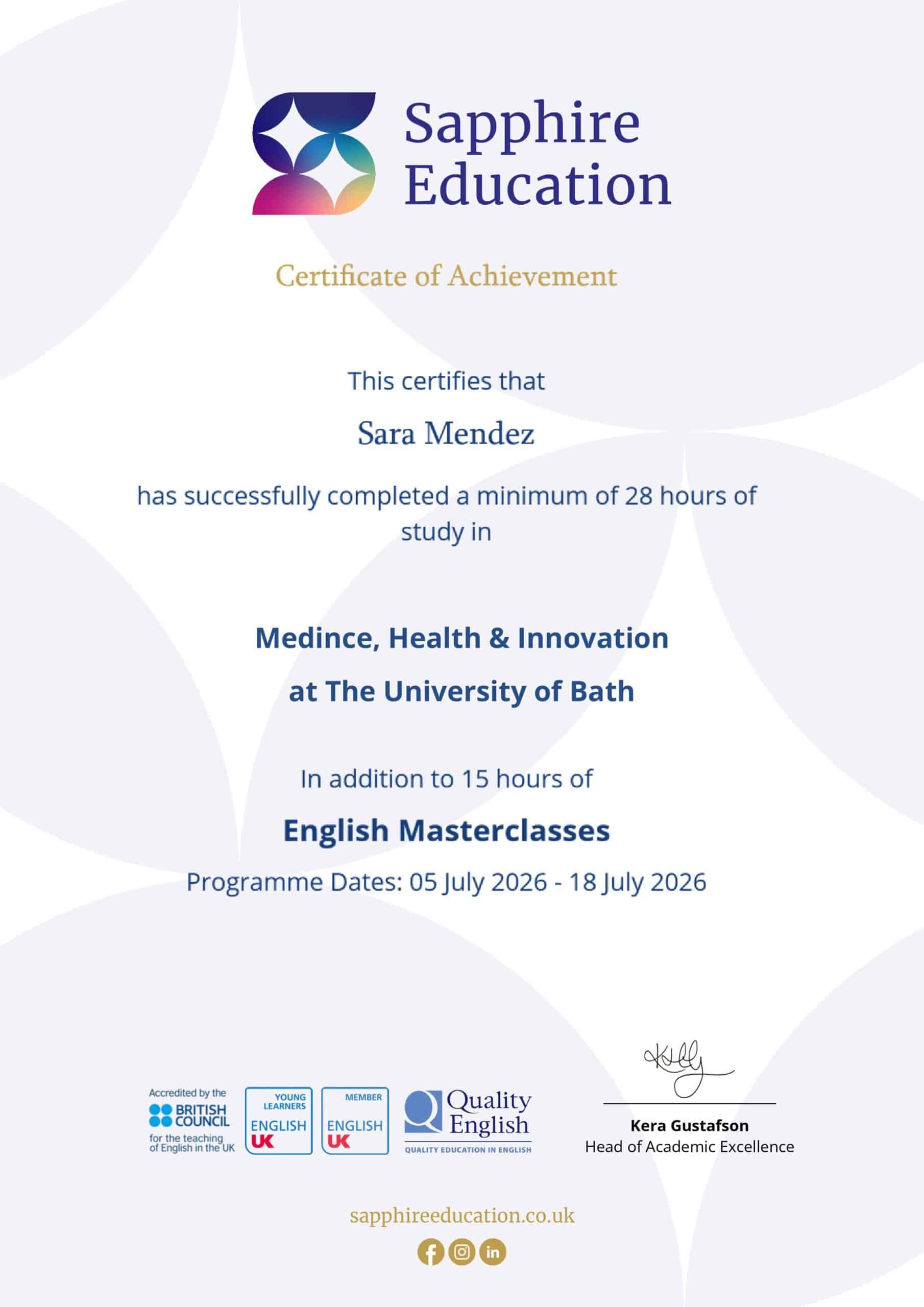
To support every student in their application for university or future careers, every student leaves with a reference letter and a certificate.
The reference letter includes:
- Details on the experiences they had on the programme
- Details on their own performance during it
The certificate includes:
- A Sapphire Education Certificate
- Course title, dates and campus
What's Included
One fee covers all subject learning, masterclasses, beyond the classroom experiences, accommodation, meals and support.
Subject Learning
- Seminars
- Workshops
- Projects
- Industry Experiences
- Innovation Showcase
Masterclasses
- Academic Writing & Academic Reasoning
- Seminar Discussion & Speaking Skills
- Lecture Notes & Study Strategies
- Research, Evidence & Academic Integrity
- Academic Showcase
Beyond the Classroom
- University Visit
- Career Guidance Workshop
- Full-Day Excursions
- Local Activities
- Cultural Immersion
- Evening Activities
Accommodation
- Modern, private en-suite accommodation
- All daily meals, with dietary requirements catered for
- Shared dining and common areas
Support & Wellbeing
- 24/7 on-site staff
- High staff-to-student ratio
- Designated mentor groups for check-ins
- Course Directors and Student Experience team throughout
Optional Extras
- Meet-and-greet airport transfers
- Unaccompanied-minor support
- Airport transfers are a paid extra unless included with a current offer.
The Sapphire Experience
Every Sapphire programme is built to create a well-rounded educational experience. Each part of the programme has been carefully designed to help students develop academically, prepare for university and make the most of their time in the UK.
What Students Say
“I’d describe my Sapphire experience as lovely, exciting and something I’ll always remember.”
Koroghlu, Student, Azerbaijan