About our Computer Science Course
This course introduces students to the foundations of computer science through programming, artificial intelligence and software development, exploring how technology is used to solve real-world problems.
Combining seminars, workshops and practical coding activities, students develop computational thinking, learn Python programming and explore emerging technologies including artificial intelligence, machine learning and cyber security.
Through collaborative, hands-on projects, they design and build digital solutions while gaining an engaging introduction to computer science and the software development process.
At a Glance
Ages 14 to 18
Ambitious students preparing for university study
University of Bath
A prestigious, safe and inspiring academic location
Residential
Full boarding in secure university accommodation
Summer 2027
4th – 17th July or 18th – 31st July
Inspiring tutors
Work with engaging, experienced tutors
£4,500
Course fee, with tuition, accommodation and activities included

What You'll Study: Course Curriculum
Foundations
What is Computer Science?
Students explore where the field came from, how far it has moved and how broad it really is. They settle on their own definition before discussing the ethics and dilemmas at the heart of computing.
Algorithmic Thinking
Students learn to think like a computer by breaking problems down, stripping out what does not matter and writing precise steps. They design their own algorithm and test why clear instructions are harder than they sound.
Programming Fundamentals
Students write real code and learn the basics of Python, including variables, user input and decision-making, so they can see why a computer works the way it does.
Artificial Intelligence
Superintelligence
Students examine what intelligence actually means, what AI is and is not, and where the future could lead. They debate risks, responsibilities and possible solutions.
Evolutionary Algorithms
Students explore how some problems are too hard to solve through brute force. They design and test an evolutionary algorithm using mutation, crossover and selection.
Machine Learning & Neural Networks
Students explore how a computer turns words into numbers, how that reveals patterns and biases in language, and how tools such as ChatGPT work.
Building Software
Game Development
Students learn what makes a game work, from mechanics to feedback loops and difficulty. They build and playtest their own 2D game.
HTML, CSS & JavaScript
Students build their own website structure with HTML, style it with CSS and add interactivity with JavaScript.
Creating a Blogging Platform
Students build a working, social-media-style blogging platform with a front end, database and Python-backed posts.
Cybersecurity
Students explore the difference between malicious hacking and ethical hacking, then learn how vulnerabilities can be found and defended against in a safe sandbox environment.
Innovation Showcase: Digital Solutions Challenge
Working in teams, students design and develop a digital solution in response to a real-world client brief.
Throughout the programme, they apply coding, design and problem-solving skills to create a working prototype before presenting their solution and explaining their development process.
Projects include:
• Educational games
• Interactive websites
• Social-media-style platforms
• Community-focused apps
• AI-inspired digital tools
The focus is on practical creation, clear explanation and the ability to show how a digital product could meet a real user need.

The Future: University and Careers
The programme is designed to give students a broad set of experiences to help them understand the different career and university options available.
Students explore future pathways across technology, software, artificial intelligence and digital innovation.
Careers linked to this course include:
Computer Science
Artificial Intelligence
Software Engineering
Cybersecurity
Data Science
Game Development
Digital Product Design
Technology Entrepreneurship
Reference Letter and Certificate
To support every student in their application for university or future careers, every student leaves with a reference letter and a certificate.
The reference letter includes:
• Details on the experiences they had on the programme
• Details on their own performance during it
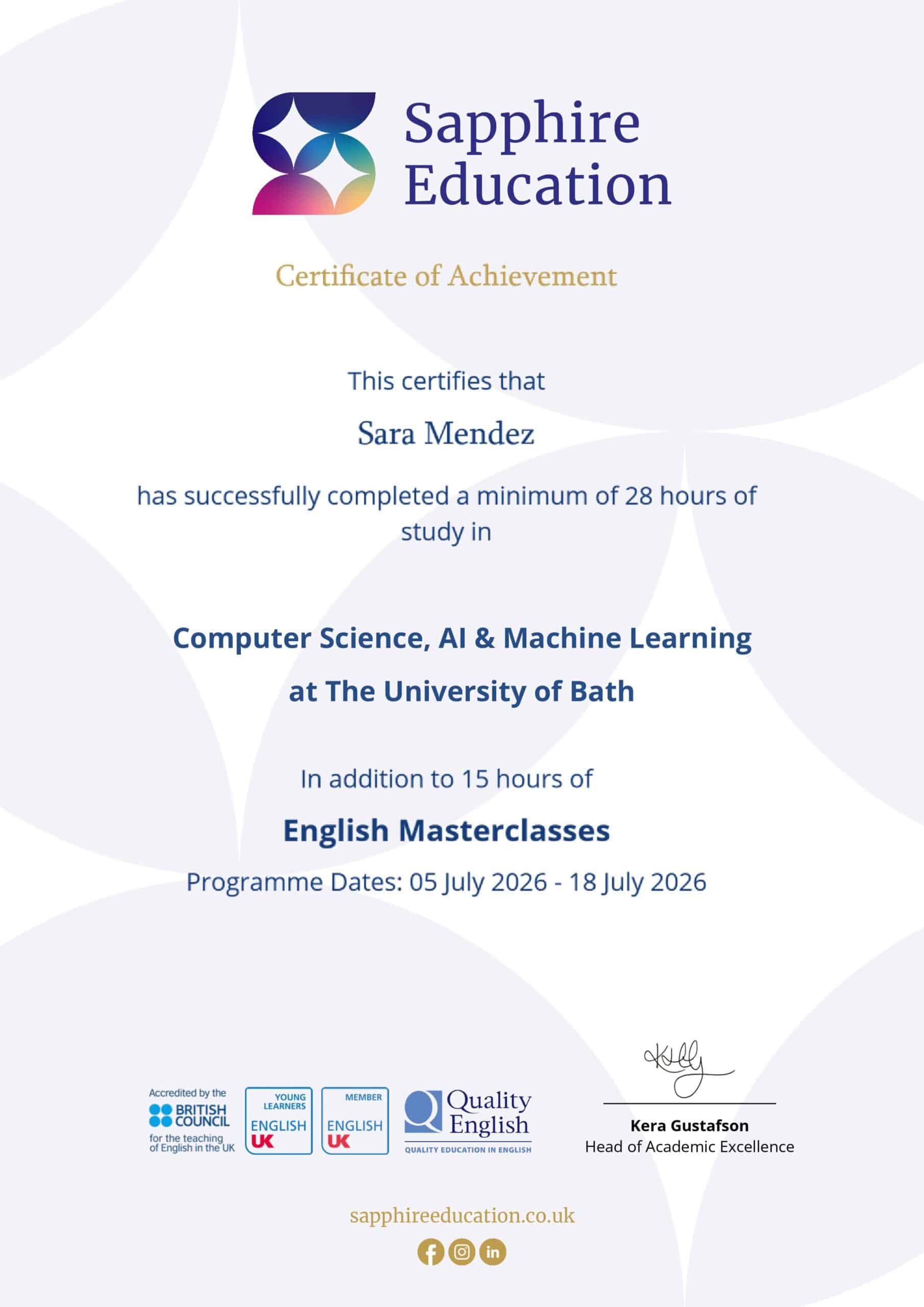
The certificate includes:
• A Sapphire Education Certificate
• Course title, dates and campus
What's Included
One fee covers all subject learning, masterclasses, beyond the classroom experiences, accommodation, meals and support.
Subject Learning
• Seminars
• Workshops
• Projects
• Industry Experiences
• Innovation Showcase
Masterclasses
• Academic Writing & Academic Reasoning
• Seminar Discussion & Speaking Skills
• Lecture Notes & Study Strategies
• Research, Evidence & Academic Integrity
• Academic Showcase
Beyond the Classroom
• University Visit
• Career Guidance Workshop
• Full-Day Excursions
• Local Activities
• Cultural Immersion
• Evening Activities
Accommodation
• Modern, private en-suite accommodation
• All daily meals, with dietary requirements catered for
• Shared dining and common areas
Support & Wellbeing
• 24/7 on-site staff
• High staff-to-student ratio
• Designated mentor groups for check-ins
• Course Directors and Student Experience team throughout
Optional Extras
• Meet-and-greet airport transfers
• Unaccompanied-minor support
• Airport transfers are a paid extra unless included with a current offer.
The Sapphire Experience
Every Sapphire programme is built to create a well-rounded educational experience. Each part of the programme has been carefully designed to help students develop academically, prepare for university and make the most of their time in the UK.
Frequently Asked Questions
The questions families and agents ask most.
Does my child need any coding experience?
No. The course starts from first principles, so complete beginners and students with some subject knowledge work at their own level.
What will students actually build on the course?
Several things they can keep: a 2D game, a working web application, a solution to a client-style brief, and a final project of their own. Most are built in small teams and presented to the group.
Which topics and tools does the course cover?
Computer Science from the ground up: Algorithmic Thinking and Programming, Machine Learning and Neural Networks, Web Development with HTML, CSS and JavaScript, Cybersecurity, and the wider questions around AI. Fifteen sessions run from the foundations through to a final project.
How are sessions taught, and how large are the groups?
Teaching is in small groups in a university style, with a high staff-to-student ratio. Most of the time is spent on practical work and projects rather than lectures.
Who teaches the course?
Every session is led by a teacher with a background in Computer Science, teaching in a university style.
Will the course help with university applications?
Yes. Students take part in a careers and university session, visit a university campus, and finish with projects they can discuss in applications and interviews. They also receive a completion certificate.
What certificate do students receive?
Students who complete the course receive a certificate recording the course title, dates and campus.
What is the accommodation like, and how are students supervised?
Students stay in modern, single en-suite rooms in a secure, university-style residence. Trained staff live on site, with a high staff-to-student ratio, regular roll-calls, key-card access and supervision on all excursions.
What's included in the fee, and what costs extra?
The fee covers teaching, accommodation, all meals, evening activities, weekend excursions and entrance costs. Airport transfers and unaccompanied-minor support are optional paid extras unless included with a current offer.
Do students need a visa, and can an agent book on our behalf?
We provide guidance and supporting documents for any visa requirements. Families can book directly with our admissions team or through a registered educational agent.
What Students Say
“The Computer Science classes were excellent. I learned so much in just two weeks and left feeling much more confident in my skills.”
Elia, Student, Italy